RSS

Author Archives: JPFmovies

Unknown's avatar

About JPFmovies

We here at JPFmovies pride ourselves at talking a hard, gritty look at entertainment from all over the world.

Here is an another She said-He said format about Quentin Tarantino’s Kill films (2003). Here is the Bonnie’s “review” of Kill Bill 1.

Here is an another She said-He said format about Quentin Tarantino’s Kill films (2003).  Here is the Bonnie’s “review” of Kill Bill 1.

Okay, first the disclaimer: me reviewing Kill Bill is sort of like JPFmovies reviewing Mary Poppins.  This is not my kind of movie.  It’s too much of a bloodbath (did I say one bloodbath? better make that plural) and even director Quentin Tarantino admits that the movie has NO moral.

On the other hand, as JPFmovies keeps pointing out, this film does belong in the genre of “girl power.”  Well, that’s nice.

Here are all the things I hate about Kill Bill:

  • the violence
  • David Carradine playing a jerk, instead of someone who has learned something from the meditative side of his art (as he did in the original Kung Fu series)
  • The portrayal of martial arts as being all about violence (okay, plus determination, but I’m still not seeing any ethics or values here)
  • Um, did I mention how much violence there is in this movie?  Kill Bill is so violent that the word “violent” is really sort of tame to describe it.  NOT ONLY THAT, but the violence in Kill Bill is almost all the fake cartoon “let’s scatter blood all over the place and call it art” violence that I’ve come to expect from Quentin Tarantino.  Even the anime violence in this film (and JPFmovies, if you want to use the anime scene or any other horrific violence, you can find that clip yourself, thank you!) is way way way too much for me.

And yet I do appreciate Kill Bill v 1 for some of what it does:

  • Uma Thurman’s portrayal of one woman’s ability to use sheer grit and determination to pull herself out of a coma and to keep going no matter how badly the odds are stacked against her
  • The Hittori Hanzo scene with Sonny Chiba (might as well just include that as a clip – see below)
  • The scene with Lucy Liu, for several reasons.  First, as I mentioned in the Hero review, I like the cinematography of this scene.  The snow, the blue light, the starting/stopping of the sound track to match the action, the wood fountain piece that keeps filling up and emptying itself out prosaically as if there were no swordfight going on right next to it.  Second, I like the moment when Uma has been injured and says to Lucy Liu, “Come at me with everything you’ve got.”  Why?  At that moment, it’s not her grit and determination I admire.  It’s her character’s ability to see her one chance and simply go for it.  Because the fact is that her one chance to get out of that swordfight alive is precisely for her opponent to come at her with everything she’s got.  Uma (I refuse to call her character The Bride just because she begins the movie in a wedding dress) at that point is supposed to be exhausted from the fight with Liu’s Crazy 88 bodyguards, and she’s just been injured.  Does she have the energy to even bridge the gap to reach Liu and attack her?  No.  So she marshals the energy she does have, instructs Liu to do the work of bridging the gap, and watches for the opening that must be there if she can spot it fast enough to use her last reservoir of strength to exploit it.  There’s something about that moment.  It’s that “all you have to do is do this right just this one time, and by the way, this one chance is all you get” feeling.  Doesn’t that give you chills?  Am I the only one who finds that not only is this scene, in its cinematography, reminiscent of many of the scenes of Hero, but it also exactly parallels Miyamoto Musashi’s response to his injury in his fight with Inshon in the Japanese television series recreation of Musashi’s life.
  • Finally, I respect Tarantino’s desire to pay homage to the Hong Kong action films that shaped him as a filmmaker.  I just wish he could have found a less bloody way to do so.  After all, they did.

There’s Kill Bill Vol. 1 for you, JPFmovies – I dare you to review Kill Bill Vol. 2 and find a bit more redemption of Tarantino in it for me.  Uma doesn’t need to redeem herself – training for and filming a martial arts movie three months after having a baby, while still nursing and trying to lose her pregnancy weight, is enough to leave me in awe of her for all time.  Tarantino, on the other hand, still has some explaining to do!!
 
12 Comments

Posted by on December 28, 2011 in Movie Reviews


Tags: , , , , , , ,

Yes only 6-8 months late we finally get the Hero review written by none other than Bonnie! Savor this review we had to file suit to get this review done.

Hero is a movie so rich in content that I almost can’t bear to watch it.  In my opinion, nobody should sit down and watch Hero from beginning to end in one sitting.  What you should do is get the DVD of Hero and watch a section at a time.  Better yet, watch each section several times.  This isn’t the kind of movie in which the plot slowly unfolds.  Though yes, it is one of those movies where the plot line is gradually revealed to be radically different than the way in which it was previously presented, even that isn’t the point of Hero.  What is the point?  Visual art painted in motion, the artful juxtaposition of cinematography with not only martial art but also the art of etiquette, ritual and ceremony.

Here is the story.

As the movie opens, we meet Nameless, a Prefect (the lowest rank in the kingdom of Qin).  He has come to let the Qin Emperor know that he has defeated, and killed, the emperor’s three legendary assassins, Sky, Broken Sword, and Flying Snow.  The Emperor, naturally, wants to know how Nameless managed to defeat such peerless warriors.  As Nameless tells the story, we see it unfold — first his telling, then the version told by the Emperor, who is shrewd enough to read between the lines, and then Nameless’ correction of the details overlooked by the Emperor.  The question is, did Nameless truly defeat Sky, Broken Sword, and Flying Snow — or did he conspire with them, convincing them to lay down their lives in order to give him the opportunity to get close enough to the Emperor to have a chance at slaying him?  Or was there a conspiracy, but one in which there was dissension in the ranks?

The answer to all these questions, the real crux of the matter, lies in the question of whether or not it was possible for Sky and Flying Snow to throw their matches with Nameless so skillfully that the Emperor’s own troops could be made eyewitnesses to testify on Nameless’ behalf.  Likewise, was Nameless skillful enough to defeat Sky and Flying Snow by apparently, but not actually, killing them — with a sword stroke so precise that it appears to kill, but allows one’s opponent, later, to be revived?

I’m not going to tell you the rest of the plot, because it is so convoluted that, frankly, you should just watch the movie and see it unfold for yourself.  Let’s move on to the actors, who are incredibly awesome.  This is a star-studded cast.  We have Jet Li (five time Wushu gold medalist) as Nameless.  Donnie Yen, who often stars in films with Jet Li, plays Sky – and these two incomparable martial artists deliver what I consider to be the best scene in the film, the duel between Nameless and Sky.  Broken Sword is played by Tony Leung Chiu-Wai, who you should recognize if you have seen Red Cliff, in which he played Zhou.  (If you have not seen Red Cliff, you are excused from the rest of this review – please take four hours RIGHT NOW to go watch Red Cliff.)  Maggie Cheung, an actress who from the age of 18 has been handed role after role in Hong Kong films without even having to audition, plays Flying Snow.  Because Hero unfolds several different plots for your consideration (and the Qin Emperor’s), each of these actors essentially played at least three different roles.

I can’t speak in any kind of an educated way about the cinematography of this film – I’m not an artist – but I have to bring it up, because it literally makes the film.  Hero’s director, Yimou Zhang, should join the ranks of Kurosawa in film history.  Each scene is Hero is up to Kurosawa’s standards – and that is saying a lot.  These scenes also bring to mind the duel between Uma Thurman and Lucy Liu in Kill Bill (another Quentin Tarantino film, though I am puzzled about Tarantino’s role in Hero – the credits mention him somewhat ambiguously).

Each scene has a color theme, and the actors wear different colors depending on the plot variation that is being acted out.  The use of color in Hero can only be described as exquisite, and it is something that you almost never see in American films.  (Or rather, I have almost never seen it – but I don’t watch as many movies as the rest of you JPFMovies fans.)

And then there are the truly sweet parts of the film.  Nameless and Sky stopping their fight to give coins to the blind Biwa player, asking him to play on as they duel.  The calligraphy teacher telling his students to keep practicing even as arrows rain down through the school’s roof and walls.  Broken Sword’s decision not to block Snow’s fatal sword thrust, just because he needs to make a point.  The lesson being taught again and again here – let’s not miss it, please – is that it’s not about WHETHER you live or die.  It’s about HOW you live or die.  That’s the point of all the etiquette.  It’s not some cute cultural reference or cinematic device – not ultimately – what it’s about, is dignity.  

Some movies are all plot. Some are all about the character development – and/or the cast. Some movies focus purely on cinematography.  Some movies push a strong moral. This movie does it all.

Finally, I know JPFmovies has been waiting a long time (probably more than six months) for this review.  But now do you see why?  Any sort of proper consideration of this movie takes a person in a million different directions.  How can it even fit in a blog post?  In 800 words or so all I have done is to sketch the outlines of Hero for you.  Can you blame me for taking so long to write this?  (JPFmovies can!)

Go forth and watch this rose of a movie, but just a little at a time, as if you were eating a box of chocolates – I know it’s Christmas, but that’s no reason to stuff yourself.

 
2 Comments

Posted by on December 25, 2011 in Movie Reviews


Tags: , , , , , , , , , , , , , , , , , , , , , , ,

O.K. here is number three in our tribute to Producer Don Simpson: Beverly Hills Cop (1984). I don’t feel like as much of a sellout as I did for the Top Gun review.

As you know from our last review, here at JPFmovies we felt some shame because we thought that we were selling out to the “Movie Man.”  Well, with Beverly Hills Cop, we are much more comfortable reviewing this film and are not feeling like JPFmovies has sold out. 


Beverly Hills Cop, though madly popular, did not have the same impact on the viewing public that Top Gun did.  RayBan did not realize a 40% spike in its sales, general fashion was not swayed nor were people lining up to enroll in police academies across the country.  That said, Beverly Hills Cop is a materially superior film that propelled a young Eddie Murphy onto the world stage. 


Beverly Hills Cop was the second wildly successful film for the Simpson/Bruckheimer team in as many years.  The duo produced and released Flashdance in 1983, grossing over $100,000,000—and that is 1983 dollars.  The next year Beverly Hills Cop reached the silver screen and earned Paramount Studios $234,000,000 courtesy of Simpson/Bruckheimer—again that is in 1984 dollars. Using the CPI and adjusting for inflation we are looking at a figure in the range of $500,000,000 today.  


Beverly Hills Cop is a comedy-action film directed by Martin Brest and starring Eddie Murphy, Lisa Eilbacher, John Ashton, Judge Reinhold, and Ronny Cox.  Murphy plays Axel Foley, a street-smart Detroit police officer who winds up in Beverly Hills trying to solve the murder of his best friend.  Foley is a young, talented, but reckless reformed juvenile delinquent turned Detroit cop.  I would like to point out here again the American theme of the individual who is talented enough in getting the job done that they can operate outside of the social norms—but more on that later. 


After getting smashed with his best friend from childhood (who is not exactly honest) the two are beat by hired goons who are looking for some German bearer bonds.  Not surprisingly, Foley’s friend is shot and killed by the goons, but when Foley tries to investigate the crime, he is denied the opportunity because of his close personal ties with the victim.  Operating under the guise of taking some vacation time, Foley heads to Beverly Hills where his friend was working when he lifted the bonds.  When he arrives in California, there are clashes between the prim, proper and rule following Beverly Hills police with the unorthodox, rule flaunting and down and dirty (but talented) Detroit cop from the streets that provides the essence of the film’s humor.


Foley is arrested several times by Beverly Hills police officers Sgt. John Taggart (John Ashton), Det. Billy Rosewood (Judge Reinhold), and Lt. Andrew Bogomil (Ronny Cox) for various legal infractions but given the cop courtesy discount and allowed to walk away while the Beverly Hills brass becomes increasingly impatient with his conduct.  However, it is Foley’s streetwise, but again unorthodox, methods that lead to a break in the case when he finds coffee grounds in the warehouse and deduces that drug trafficking is afoot, the coffee grounds being used to throw off the drug sniffing dogs.  While Taggart and Rosewood do not appreciate the significance of this find, Bogomil does, paving the way for the Beverly Hills police and Foley to begin cooperating in the investigation of the criminals instead of butting heads. 


When Foley’s other childhood friend (who works for the bad guys) is kidnapped, Foley convinces Taggart, Rosewood, and Bogomil to help him rescue his friend and bring the wrongdoers to justice.  The finale is a firefight that kills most of the criminals and results in a shoulder wound to Foley.


Since Foley is likely to be out of a job in Detroit for disobeying his boss’ orders, Bogomil decides to speak to Inspector Todd and smooth things over.  Again, the protagonist is getting away with breaking the proverbial rules but being rewarded (instead of disciplined) because he “got the job done.”  Though Bogomil initially refused to help Foley, when Foley threatens to stay in Beverly Hills and become a private investigator, Bogomil quickly changes his mind.  Before Foley leaves Beverly Hills to return home, he asks Taggart and Rosewood to join him for a farewell drink and they accept the invitation even though they are on duty.  When they ask where they are going, Foley says to them, “Don’t worry about it.  I’ve found the perfect place.  You guys will love it.  Trust me.”  The Beverly Hills police also pick up Foley’s large tab at the Beverly Hills Hotel. 


Some Interesting Facts about Beverly Hills Cop include:


Martin Brest flipped a quarter to decide whether to undertake the direction of the film or not.  When the movie proved to be an enormous hit, he framed the quarter and hung it upon his wall.


The part of Foley was originally offered to Sylvester Stallone.  However, two weeks before filming, Stallone was out and Murphy was in.  According to Murphy, Stallone wanted a “harder edged” screenplay (Stallone essentially rewrote Beverly Hills Cop as what would be the 1986 film, Cobra); the role was re-written for Murphy.


Many of the comedy scenes were improvised including the “5 pounds of red meat in his bowels” and literally hundreds of takes were ruined when cast members, actors, or the director himself, were unable to stop laughing during shooting because of this.  During the “super-cops” monologue, Ashton is pinching his face hard and looking down in apparent frustration.  In actuality, Ashton is laughing.  Reinhold put his hand in his pocket and pinched his thigh hard to prevent himself from laughing.


Axel Foley’s boss, inspector Todd, played by Gilbert R. Hill, was a real-life detective in the Detroit Police Department who later became a Detroit City Council member and mayoral candidate.


The scene in which Foley, Rosewood, and Taggart give an explanation to Bogomil about the strip club arrests was also improvised.


Cannonball, Top Gun and Beverly Hills Cop all tap into the formula I keep raising about the underdog individual.  In Cannonball, Carradine plays a super talented yet reckless driver who ignores his parole obligation and is at least partially responsible for probably half a dozen fatal accidents, speeding across the country and de facto winning the race, and is rewarded with a lucrative contract after his rival dies a fiery death.  Top Gun doesn’t even try to disguise its theme, calling the main character, who is at least partially to blame for his co-pilot’s death because he was angling for another point by forcing the other plane out of position, “Maverick.”  Yet once Maverick proves his superior flying abilities in combat, not only is all forgiven but he is in fact rewarded by being presented with the opportunity to become a Top Gun instructor.  As we’ve seen in Beverly Hills Cop, Foley clashes with the rule following Beverly Hills cops but once his police acumen is displayed, all his law breaking conduct is forgotten and again, the protagonist is even rewarded when Bogomil covers for Foley and his stay is compliments of the department.


Simpson and Bruckheimer were pioneers who stumbled upon a paradigm that attracted American audiences. They perfected the formula, turning virtually all of their films into what is now known as the modern day action-comedy Blockbuster.  While many moviegoers don’t know who Don Simpson is, they sure know his work.  Thanks Don, you should have stuck around longer.


JPFmovies

 
Leave a comment

Posted by on December 19, 2011 in Movie Reviews


Our second film paying tribute to producer Don Simpson: the 1986 blockbuster Top Gun. This is a tough review because the good parts are very good and the bad parts are inexorably bad.

Our second film paying tribute to producer Don Simpson: the 1986 blockbuster Top Gun.  This is a tough review because the good parts are very good and the bad parts are inexorably bad.

The news that there might be a sequel to Top Gun is what inspired us at JPFmovies to do a three part tribute to the legendary producer Don Simpson—so I would be a fool to not review the film, but for some reason I feel kind of dirty or that I have somehow sold out to the movie “man” for writing this.  Putting that to one side, we’ll do the best we can and here it is.

One is hard pressed to find a movie that better embodies the 1980s feel good blockbuster film genre than Top Gun.  To say it put Tom Cruise on the map is an understatement and like the Bandit’s famous Trans Am, Cruise’s motorcycle, the (then) fastest motorcycle in production,  Kawasaki’s Ninja 900, became an icon overnight.  RayBan experienced a 40% spike in sales because of Top Gun, just as it had 3 years earlier when Cruise played Joel Goodsen in “Risky Business” sporting RayBan’s Wayfarer sunglasses.  Top Gun even convinced people to join the military; booths were set up outside of theaters and Navy recruitment increased by 500%.  The film also brought back the leather jacket and white T-shirt look of the 1950s.  Now that I think about it, I am not sure that any film since Top Gun had the kind of power this film did to influence the public.  I mean a 500% increase in military recruitment rivals the wretched propaganda the infamous Nazi Joseph Goebbels inflicted on the German people before and during WWII.  The Harold Faltermeyer (also creator of other 1980s soundtracks such as Beverly Hills Cop I and II & Miami Vice) soundtrack reached number 1 on the Billboard charts and remained there for 5 weeks while the song “Take My Breath Away” won an Oscar.

Cruise plays Pete “Maverick” Mitchell, a maverick Navy fighter pilot.  Maverick embodies what I think is a character type loved by Americans: the “maverick” underdog who is so talented that he can flout conventional rules and get away with it.  We see this type of creature in Clint Eastwood’s Dirty Harry films, the cop who can play “dirty” because he gets the job done.  We see a variation in Sylvester Stallone’s Rocky Balboa who plays the ultimate underdog by going from gym boxer to world heavy weight champion in only two movies and now we see it in Top Gun’s Maverick.

Maverick (or “mav” as he is often referred to in the film) is the “bastard” son of another naval aviator who was killed in Vietnam — the “ghost” of his father is partially responsible for his reckless flying and consistent rule violations.  Maverick and his REO “Goose” (Anthony Edwards) are sent to Top Gun school because the top pilot “Cougar” (John Stockwell who also starred with Cruise in “Lose’n It” — a “b” movie that I’ll bet neither one of them wishes they had made) freaks out after engaging an enemy plane and turns in his wings. 

At a bar the day before the Top Gun school starts, Maverick, assisted by Goose, unsuccessfully hits on a woman by singing “You’ve Lost That Lovin’ Feelin.”  Much to Maverick’s surprise, the next day he learns that she is Charlotte “Charlie” Blackwood (Kelly McGillis), an astrophysicist and civilian Top Gun instructor.  Maverick’s reckless flying both annoys and impresses Rick “Jester” Heatherly (Michael Ironside) and the other Top Gun instructors when he defeats Jester in combat, but violates several rules of engagement in the process.  Maverick and top student LT Tom “Iceman” Kasansky (Val Kilmer) quickly emerge as the two best pilots, but Iceman openly considers Maverick’s methods “dangerous.”  Although outwardly critical of Maverick’s tactics, Charlie eventually admits that she venerates his flying but harshly reviews it in public because she’s afraid her credibility would be jeopardized otherwise. Nonetheless, Maverick and Charlie begin a romantic relationship.  I am not sure that merely scrutinizing a pilot’s flying would save her credibility after having an affair with a student but it is part of the story. What is not part of the story is that every time McGillis and Cruise stand next to each other in the film, McGillis is in bare feet and Cruise wears lifts because he is so short. 

During a training flight near the end of the film, Maverick and Iceman are both chasing Jester each trying for the kill.  Under intense pressure from Maverick, Iceman breaks off but Maverick’s F-14 flies through the jet wash of Iceman’s aircraft and begins a flat spin from which he cannot recover, forcing him and Goose to eject.  Goose is not so lucky here as he ejects directly into the canopy and dies instantly.  Although a board of inquiry clears Maverick of any wrongdoing, his overwhelming guilt over Goose’s death causes him to lose his aggressiveness when flying.  Charlie and others attempt to console him, but Maverick considers leaving the Navy.  Unsure of his future, he seeks Top Gun’s head instructor Viper’s advice who reveals that he served with Maverick’s father in VF-51, and discloses classified details that show Duke Mitchell died a hero’s death.  Viper informs Maverick that he can graduate from Top Gun or quit.  Maverick chooses to graduate, but his rival Iceman wins the award for top pilot.

During the graduation party, Iceman, Hollywood, and Maverick are each sent to carrier Enterprise to deal with a “situation,” to provide air support for the rescue of another ship, the SS Layton, that has drifted into hostile territory.  Maverick and Merlin are assigned to one of two F-14s as back-up for those flown by Iceman and Hollywood, despite Iceman’s reservations over Maverick’s state of mind and ability.  In the subsequent dogfight against six MiGs, Hollywood is shot down but manages to safely eject; Maverick is sortied alone due to catapult failure and nearly retreats after encountering circumstances similar to those that caused Goose’s death.  He rallies though and joins Iceman, shoots down four MiGs and forces the others to retreat — then both return triumphantly to the Enterprise.  Offered his choice of duty, Maverick decides to return to Top Gun as an instructor and while sitting alone in a restaurant, he hears “You’ve Lost That Lovin’ Feelin’” playing on the jukebox and recalls meeting Charlie.  Low and behold, she enters the bar and the two reunite.

Well what more can you say?  It may be formulaic, but Simpson and Bruckheimer sure know their chemistry.  Top Gun grossed $378,000,000 worldwide and the dollars keep rolling in as a result of the dvd market.  The film was directed by Tony Scott, Ridley Scott’s younger brother.  Ridley Scott is one of my favorite directors so I was pleasantly surprised to discover this fact.

Like I said though, this one has terrifying highs and dizzying lows, but I still feel like a sell out for reviewing it.  Am I wrong to feel this way?

 
Leave a comment

Posted by on December 15, 2011 in Movie Reviews


Tags: , , , , , , , , , , ,

Cannonball (1976) or Don Simpson why didn’t’ you sue the makers of Cannonball Run for copyright infringement?

David Carradine stars in Cannonball, also known as Carquake, a 1976 film that was one of two released in ‘76 (the other being The Gumball Rally) that were based on a real illegal cross-continent road race which took place for years in the United States.  The same theme was later copied by The Cannonball Run, Cannonball Run II and Speed Zone!  The Cannonball was directed by Paul Bartel, who, together with Don Simpson, wrote the film.  Simpson even makes a cameo, but we will get to that later.  Apparently the name of the film and the plot were inspired by Erwin G. “Cannon Ball” Baker, (1882-1960), who traveled across the USA several times and by the Cannonball Baker Sea-To-Shining-Sea Memorial Trophy Dash, an illegal cross-continent road race introduced by Brock Yates to protest the 55 MPH speed limit—a fine protest indeed.


The Trans-America Grand Prix is an illegal underground race held every year starting in Los Angeles and finishing in New York City.  Coy “Cannonball” Buckman (David Carradine) hopes to win the race and get his career back on track as he was recently released from jail serving time for killing a girl while driving drunk (we find out later someone else was driving).  “Modern Motors,” a prominent racing team, has promised a contract to either Cannonball or his nemesis Cade Redmond (Bill McKinney), whichever one of them wins.  Cannonball is still on probation when his parole officer, Linda Maxwell (Veronica Hamel), who he is having an affair with (only in the 70’s: truly outrageous), determines he will be crossing state lines in violation of his parole but instead of stopping her parolee, she is co-opted into joining the “fun.”


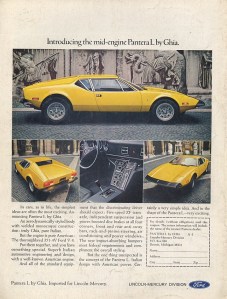
Other drivers include teenage surfer sweethearts Jim Crandell (Robert Carradine—who would go on to play Lewis Skolnick in the 1984 classic Revenge of the Nerds) and Maryann (Belinda Balaski) driving Maryann’s father’s Chevrolet Corvette, middle-aged Terry McMillan in a Chevrolet Blazer, three stimulating waitresses, Sandy (Mary Woronov), Ginny (Glynn Rubin) and Wendy (Diane Lee Hart) driving in a van, haughty German driver Wolfe Messer (James Keach) driving the yellow De Tomaso Pantera, preppy African-American Beutell (Stanley Bennett Clay) in a Lincoln Continental Mark V, a car which he was hired by a wealthy elderly couple to transport to New York for them and Cannonball’s best friend “Zippo” (Archie Hahn) in a Pontiac Trans Am identical to Coy’s.  


Unlike Cannonball Run and others, this race degenerates into a violent and deadly demolition derby.  The Pantera is blown-up, Beutell’s borrowed Lincoln Mark V becomes progressively more damaged as he crosses the country, while Jim and Maryann face engine trouble with the Corvette’s broken fan belt.  The rivalry between Cannonball and the increasingly-unstable Redmond gets out of control as they try to force each other off the road costing Coy his Trans Am after Redmond breaks the headlights.  Luckily, he finds some hicks who just happen to have a 1968 Ford Mustang that admire Cannonball and offer to trade cars as long as when he wins the race, he mentions their name on TV.  Coy and Redmond have their final showdown on an unfinished bridge, which Cannonball and his newly acquired Mustang successfully jump while Redmond loses control, crashes over the side and dies when the car explodes.


Bennie, meanwhile, has sent a gunman to kill the driver of the “other” red Trans Am as it is beating Coy.  He is unaware that the driver is Zippo or that Linda is now riding with him, as Coy thought it safer for her to do so since Redmond was after him.  While with Zippo, she has found out that it was Zippo who was driving the car in which the girl was killed, not Coy.  Coy took the blame because he knew the weaker Zippo would never survive in jail.


Bennie’s gunman shoots Zippo dead and the Trans Am crashes and explodes.  Linda jumps clear, but is injured.  Jim and Maryann see the wreck and pick up the comatose Linda, taking her to the hospital.  Behind them, the presence of the wrecked Trans Am on the freeway causes a multiple-car pileup.


Terry McMillan and Louisa arrive first at the finish line, but Louisa lets slip that the Blazer was flown there and he is disqualified.  The girls in the van and Coy are neck-and-neck until Sandy attempts to take a shortcut when the girls get lost and are stuck in traffic and the van crashes.  Coy arrives at the finish line and is about to stamp his timecard, making him the official winner, when he is told about Zippo and Linda’s accident and realizes Bennie caused it.  He tears up his timecard so it can’t be stamped and gives the pieces to Bennie, who is taken away by gangster Lester Marks (played by the film’s director Paul Bartel) to whom he owes all the money he bet on Coy, presumably to be killed.  Assured of his racing contract, Coy is taken to the hospital to be reunited with Linda by the team manager.  Having decided to finish the race in spite of believing they cannot win having lost so much time, Jim and Maryann are the next to arrive at the finish line.  They are surprised and overjoyed to be told they are the winners of the $100,000 first place prize.


At the hospital, Coy and Linda enjoy their reunion, while Beutell delivers the Lincoln – now completely wrecked – to its horrified owners.


Cannonball is the movie that broke the dam and started a flood of films revolving around illegal coast to coast car races.  In fact, I am shocked that the makers of Cannonball Run were not sued for copyright infringement.


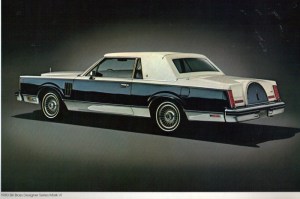
The cameos by Martin Scorsese and Sylvester Stallone (clip provided) are uncredited, while Roger Corman and Don Simpson are both listed in the credits (clip of Don Simpson as Assistant DA).  The real stars of this movie however are the cars.  The film showcases some of the most popular American and a token European (Pantera) muscle cars, ever to make their way on to the road.  My mom had a Lincoln Mark V, just like the one in the film (See the picture of the Lincoln and the clip)—it was even the same color, except that we had a white leather interior.  That Lincoln could have won a race–it had a huge motor in it and it felt like you were riding on your living room couch.  Unfortunately, they don’t make them like that anymore.  There was also a Dodge Charger, Trans Ams (must be popular because there are two of them), a Corvette, Mustangs and the Pantera–all rigged up.  


Some of the highlights to look for include the massive car pileup on the interstate towards the end of the film and the exploding Detomaso Pantera.  As you can imagine there’s enough car carnage to make even the most Blues Brothers hardened fan giddy with excitement.  There is also an element of violent explosion with other drivers not even giving the accident a second glance.  I would also like to point out the outfit that Stallone is wearing while he and his cohorts are eating a bucket of KFC.  I love KFC.  It was good to see all of those great cars again, throw in some bad acting and one of my personal favorite actors David Carradine and that is a recipe for a fantastic film.  To those who say this is a “B” film my reply is simple F%$^k You.

 
4 Comments

Posted by on December 12, 2011 in Movie Reviews


Tags: , , , , , , , , , ,

I just read on the CBC news website that talks are underway for Top Gun (1986) sequel.

I just read on the CBC news website that talks are underway for Top Gun (1986) sequel.

It was reported that “Tom Cruise recently confirmed he is in talks for a Top Gun sequel.”

“I hope we can figure this out, to do it again,” the 49-year-old actor told MTV News in Dubai.

“We all want to make a film that is in the same kind of tone as the other one and shoot it in the same way as we shot Top Gun.”

A Top Gun sequel, I am not sure how to react to this news.  While I may be giving away my age, I saw Top Gun in the theater (several times) and looking back on it now, the cast was “power house” to say the least.  The film starred Tom Cruise, Kelly McGillis, Meg Ryan, Val Kilmer, Anthony Edwards, Tom Skerritt and Michael Ironside.  Directed by Tony Scott and produced by the famed Don Simpson and Jerry Bruckheimer.

What interests me most is who will produce the film?  For 14 years Don Simpson and Jerry Bruckheimer were probably the most successful producing partnership in history.  Their films include Flashdance (1983) with Jennifer Beals, Beverly Hills Cop (1984) starring Eddie Murphy, Top Gun (1986) with Tom Cruise, Beverly Hills Cop II (1987) and Days of Thunder (1990) with Tom Cruise as “Cole Trickle.”  And that is just their 1980’s repertoire.  By 1995, they produced one hit after another.  In that year alone, Simpson was responsible for Bad Boys (1995), the Will Smith/Martin Lawrence film that was Columbia Pictures’ highest grossing movie of the year; Michelle Pfeiffer in Dangerous Minds (1995); and Crimson Tide (1995).  In 1996, Simpson produced The Rock (1996) starring Sean Connery and Nicolas Cage. The film brought in nearly $350 million worldwide at the box office, and set the video rental market record as the most-ordered film in history.  Unfortunately, the Rock was Simpson’s last movie.  Don Simpson died in 1996 “of natural causes.”  This is B.S. because after reading the biography of Simpson, the amount of drugs he did rivaled (if not surpassed) that of the fabled Hunter S. Thompson character described in his most famous book (and later two films) Fear and Loathing in Las Vegas.

Bruckheimer, nicknamed “Mr. Block Buster” is still producing like crazy.  He was recently quoted as saying: “Top Gun (1986) is no different from Pirates of the Caribbean – in fact, they’re very similar because both movies were working in genres that were dead.  Fighter pilot movies had all failed and pirate movies had been dead for a long time.  We approached them from a different angle.”

A curious quote, from a very successful man.

This gives me the inspiration to do another trilogy, a tribute to Don Simpson.  So that is what is coming next folks.

 
Leave a comment

Posted by on December 9, 2011 in Movie Reviews


Tags: , , , , , , , , , , , , , , , , ,